
On Tuesday, November 10, 2026, the Ohio General Assembly finished its votes on Senate Bill 214, a bill that would remove suppressors and what Ohio law calls “sawed-off firearms” from the state’s list of “dangerous ordnance.” Here is the plain version of what the bill is, where it stands, and what it means if you are thinking about a suppressor or a short-barreled rifle.
The short answer: as of this writing on November 12, 2026, SB 214 is not law. The governor has not signed it, and Ohio law has not changed. Buying a suppressor or an SBR in Ohio today works exactly the way our guide to buying a suppressor in Ohio describes.
What SB 214 is
This is Senate Bill 214 of the 136th Ohio General Assembly (2025-2026), sponsored by Sen. Kyle Koehler. Its official short title is “Remove firearm mufflers, suppressors as dangerous ordnance.” The official long title reads: “To amend sections 1533.04, 2923.11, 2923.12, and 2923.17 of the Revised Code to remove firearm mufflers and suppressors and sawed-off firearms from the classification of dangerous ordnance.”
One note if you go looking for it: earlier General Assemblies had their own, unrelated bills numbered SB 214. Make sure you are reading the one from the 136th General Assembly. The official bill page has the text, the analysis and the vote record.
What “dangerous ordnance” and “sawed-off firearm” mean
“Dangerous ordnance” is a category in Ohio’s criminal code. Today that list includes firearm mufflers and suppressors and sawed-off firearms, alongside things like automatic firearms and explosive devices. The Ohio Legislative Service Commission’s analysis of the bill explains that, under current law, a person may not acquire, have, carry or use dangerous ordnance unless an exemption applies, and that one of those exemptions covers an owner whose item is registered in the federal National Firearms Registration and Transfer Record. That federal registration is the step our customers go through when they file an ATF Form 4.
“Sawed-off firearm” is Ohio’s statutory term. Section 2923.11 of the Revised Code defines it as “a shotgun with a barrel less than eighteen inches long, or a rifle with a barrel less than sixteen inches long, or a shotgun or rifle less than twenty-six inches long overall,” with an exception for certain firearms at least twenty-six inches long overall. In everyday shop language, that is the territory of short-barreled rifles (SBRs) and short-barreled shotguns.
Where the bill stands
- March 25, 2026: the Senate passed the original version, 31-1. That version covered only suppressors.
- November 10, 2026: the House passed a substitute version, 69-27. The House version added sawed-off firearms.
- November 10, 2026: the Senate concurred in the House amendments, 21-9.
So the bill has passed both chambers, and the next step is Gov. Mike DeWine. When we checked the official status page on November 12, 2026, the Senate’s concurrence on November 10 was the last action listed. A bill that has passed the legislature is not law yet. SB 214 would only take effect if it becomes law under Ohio’s process, and nothing changes on the day a bill passes the legislature. We are not going to guess at an effective date.
What it would change, and what it would not
What it would change: Ohio law only. As the title says, the bill would remove firearm mufflers and suppressors and sawed-off firearms from Ohio’s dangerous-ordnance classification. According to the Legislative Service Commission’s November 10 analysis of the House committee version, that means Ohio’s dangerous-ordnance offense would no longer apply to those items, and under Ohio law an owner would no longer need the federal registration to be exempt from it.
What it would not change: federal law. A state bill cannot change federal rules, and the same analysis says so directly: “under federal law, registration is still required under the ‘National Firearms Act.’” That is what the federal statute says. What the federal government is actually enforcing changed separately, and it is worth understanding the two things side by side.
On October 9, 2026, the ATF released an open letter saying it will not enforce the National Firearms Act’s approval, registration and tax-stamp requirements for suppressors, short-barreled rifles, short-barreled shotguns and “any other weapons,” following a federal court decision in Texas that the Department of Justice chose not to appeal. The ATF’s announcement also says three things that matter here. The guidance “does not supersede state and local laws that restrict NFA firearms.” Because many state laws tie legality to registration, the ATF “will continue to process NFA applications that are submitted.” And dealers must still complete the Form 4473, run the NICS background check and follow the Gun Control Act. Machine guns are not part of any of this; the $200 tax and the full NFA process still apply to them.
Why that matters in Ohio right now: Ohio’s exemption from the dangerous-ordnance offense is written for items registered in the federal registry. So in Ohio today, the registered route, meaning the ATF Form 4 and the approval that comes back, is the route that keeps a suppressor or SBR owner inside the state exemption. That is the gap between federal enforcement and Ohio’s statute that SB 214 would close. Until the bill becomes law, we keep filing the Form 4 for every suppressor and NFA item that leaves our shop, and we recommend you keep yours.
The bill also amends the section of Ohio’s hunting law that mentions suppressors (section 1533.04). We are not going to interpret how that would play out in the field. If the bill becomes law and you hunt suppressed, check with the Ohio Division of Wildlife before the season.
If you are buying a suppressor or SBR today
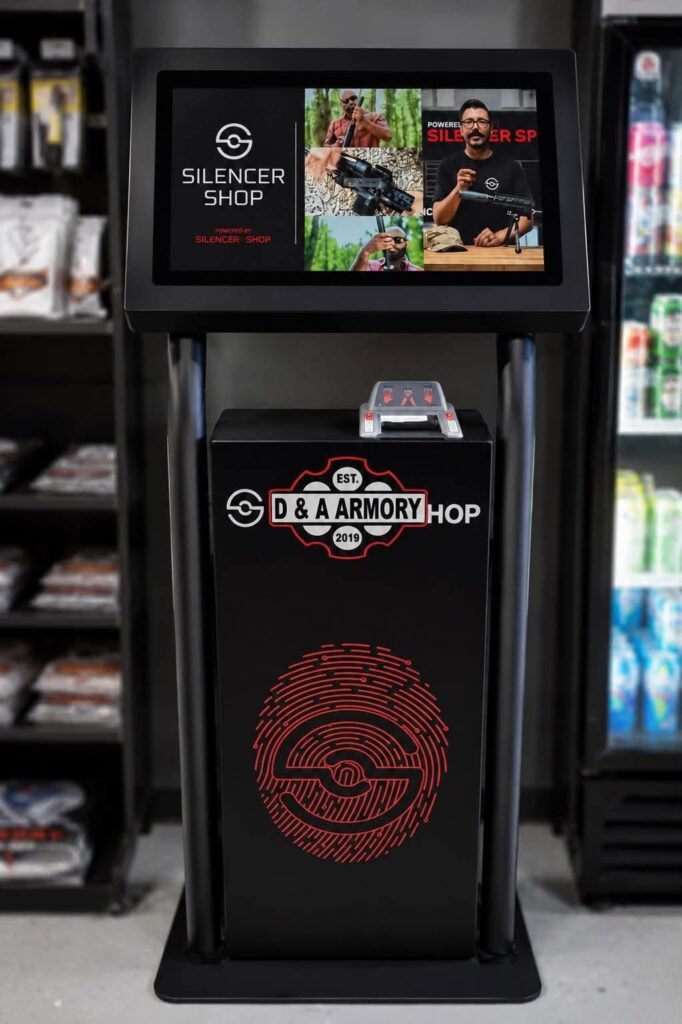
Nothing is different at our counter. You pick the item, use the Silencer Shop kiosk in the store for fingerprints and a photo, the ATF Form 4 is filed, and you pick it up after the approval comes back. Our suppressor guide describes Ohio law as it stands today, and the NFA page covers how transfers work at D&A Armory. If you want to see what is on the shelf, the suppressor listings are online.
If you have a question about your own situation, stop in at 34990 Royalton Rd in Grafton or call us at 440-669-3914. If we do not know the answer, we will tell you that, too.
Quick answers
Is SB 214 law yet?
No. As of November 12, 2026, it has passed the Ohio House and Senate, but the governor has not signed it and it is not in effect.
Does SB 214 change the Form 4 or the federal process?
No. It is a state bill and would change Ohio law only. The federal picture changed on its own on October 9, 2026, when the ATF said it would stop enforcing registration for suppressors and short-barreled firearms. Ohio’s current law still ties its exemption to that registration, which is why we still file the Form 4 today.
Does the bill cover short-barreled rifles?
The version that passed covers “sawed-off firearms,” which Ohio law defines by barrel and overall length. That definition takes in short-barreled rifles and short-barreled shotguns. The original Senate version covered only suppressors.
Do I need to wait to buy a suppressor?
That is up to you. The purchase process today is the one in our guide, and the Form 4 route keeps you inside Ohio’s current law whether or not SB 214 is signed. We do not see a reason in the bill itself to hurry or to hold off.
Will your suppressor guide change?
Our suppressor guide describes Ohio law as it stands today. If SB 214 becomes law, we plan to revisit it.
This post is general information, not legal advice. It reflects the official record as we read it on November 12, 2026. Laws can change and individual situations vary. Check the official SB 214 bill page for the current status, and talk to us or a qualified attorney about your own situation. It is ultimately your responsibility to comply with all applicable local, state and federal laws.

Leave a Reply
You must be logged in to post a comment.